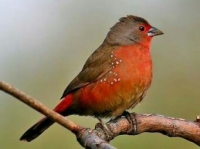
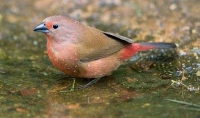
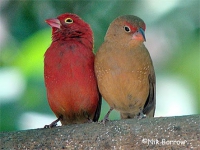
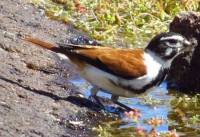
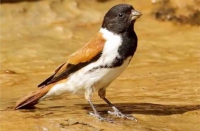
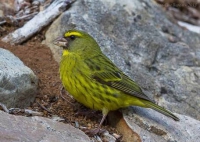
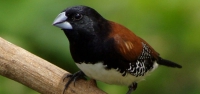
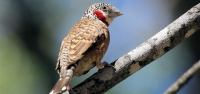
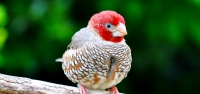
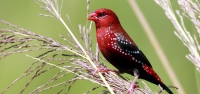
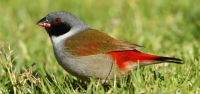
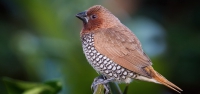
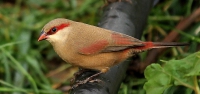
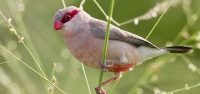
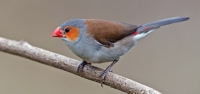
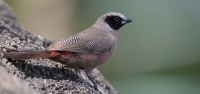
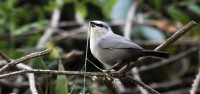
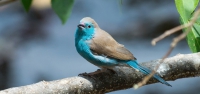
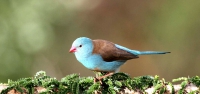
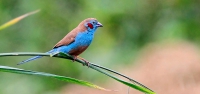
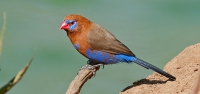
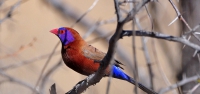
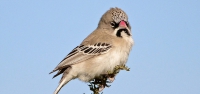
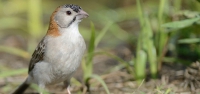
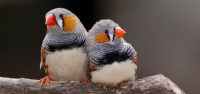
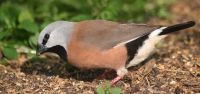
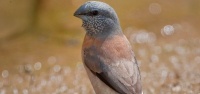
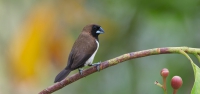
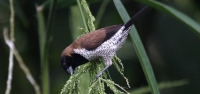
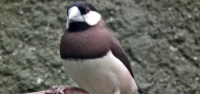
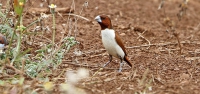
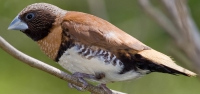
Within a few weeks one pair were displaying to each other. I spoke to a colleague who had bred this species the year before. He told me that they only needed quite modest breeding accommodation, that the nest did not require special screening, and that in his opinion they were the easiest waxbill to breed that he had ever kept!
They had their own breeding cage about 36” by 15” by 15”. I put a nest box in the bottom corner with soft hay and coconut fibre. I lodged a small piece of food to the side of the nest box to give them a little privacy. They went to nest fairly quickly. The hen did not mind me looking into the nest, maybe because she was captive bred. Four eggs were laid and three hatched. The young were reared using the food mentioned above plus a few white skinned mealworms. All three young left the nest but one was markedly smaller than the others and died after a few days despite the adults continuing to feed it. The other 2 were reared successfully. This pair did not attempt to nest again that year.
The second pair were housed in an aviary measuring about 6’ by 3’ and an attached inside flight measuring about 4’ by 3’. They were kept with a pair of Green Singing Finches (serinus mozambicus). All got along OK but none attempted to breed until I found a round nest outside on the floor up against the shed towards the end of September. Nothing was inside until I saw two eggs in early October. The weather was getting cooler by then and nights longer. Twinspots do not seem to incubate all the time and so I faced the decision of leaving alone or moving the nest inside and hoping the parents would not desert. I decided on the latter and fortunately the parents continued to incubate and two young were reared. Feeding was the same as with the first pair. Unfortunately all the young turned out to be cocks.
I have found them to be:
- Relatively easy to breed as I was told (although I did not believe it at the time!)
- Not fussy eaters or requiring large amounts of livefood to rear
- Ground nesters but not requiring large enclosures or cover
- Relatively hardy. I allow them access to outside flights in winter although they are shut inside at night. If the days are very cold and particularly wet and windy I do not let them out
Regrettably, I have decided not to keep them any longer, the reason being the cocks are very aggressive. I have limited space and the only species that they could live with were the Green Singing Finches. Other waxbill species were often chased, and although no fighting occurred it would make breeding from other species difficult. Any other birds with red in their plumage were sometimes attacked, and I think keeping two cocks in the same flight would eventually lead to death. I know of another UK breeder with more breeding success than me with this species who has made the same decision.
UK breeding success with waxbills has improved immeasurably in the last 5 years or so. I put this down almost entirely to feeding. Using an austerity diet when not breeding, softfood to help through the moult, and a good mix to get them into breeding condition and rearing. Livefood does not seem as critical as we once thought and seeding grasses are probably more important – not available in winter though.
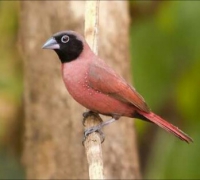
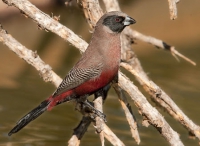
Peters Twinpots have been bred in reasonable numbers in recent years and their price has come down from about GBP180 > 200 a pair to probably around GBP 100. I have one pair of Black Cheeked Waxbills but have only had them for 6 months and so cannot give much advice on these yet. They are much more uncommon in UK aviculture than Twinspots, Violet Ears and probably now Purple grenadiers as well.