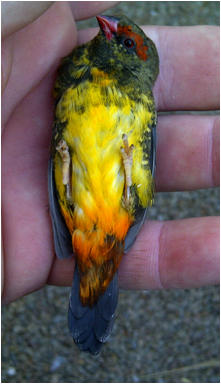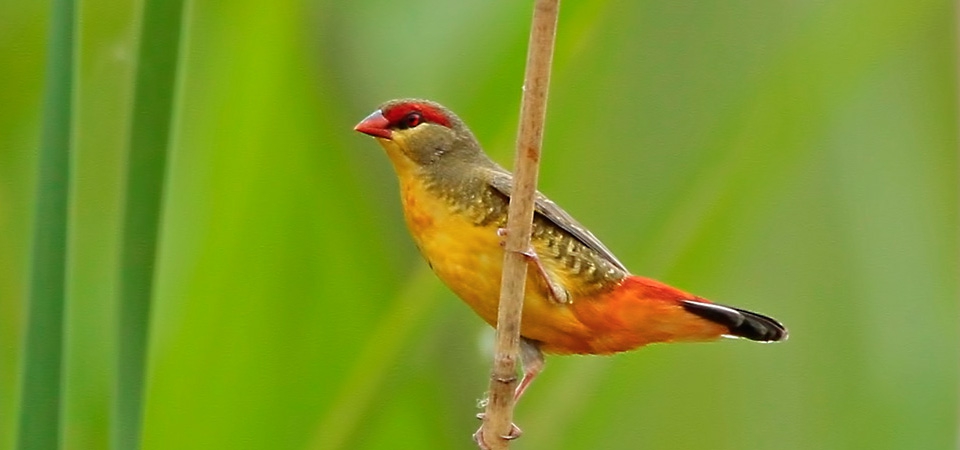
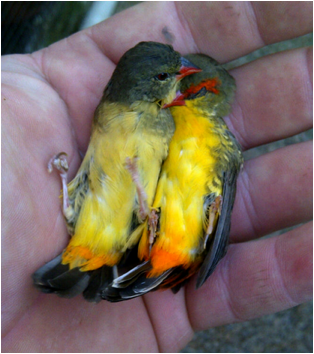
Very easy to sex mature birds. Cocks are much more colourful with yellow from the throat downwards (cock right) Some individuals will show variation with the amount of orange on the breast but we will get to that in a moment.
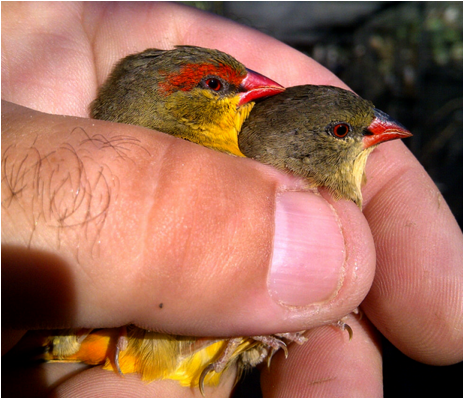
The cock also has a bright red eye stripe lacking in the hens. When buying juveniles also look for red dots in this area on the "hen" as it may very well be a young cock.
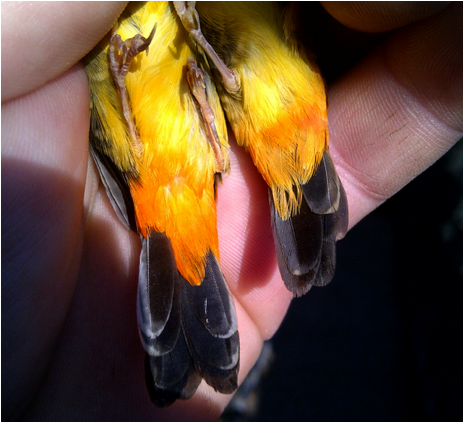
Hens also have much less orange in the ventral region (hen right) Notice the similar white edging to the tail feathers as in the Red Avadavat. They are closely related and will hybridize so keep them seperate!
That concludes sexing but I would like to point out the difference in the sub-species.
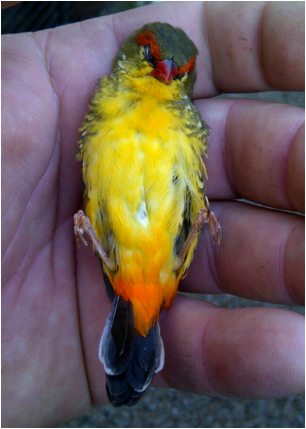
This is the local sub-species Amandava subflava clarkeii. The birds are described in all the literature as being yellow on the breast (as this bird shows) and that the northern nominate race is orange. So therefor people pay more when the bird shows orange on the breast as this must be the exotic one.
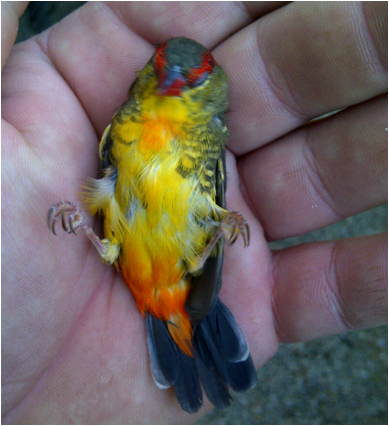
But some birds like this one does show a spot of orange to the breast, and they occur in the same flocks as the yellow ones therefor its the same sub-species.
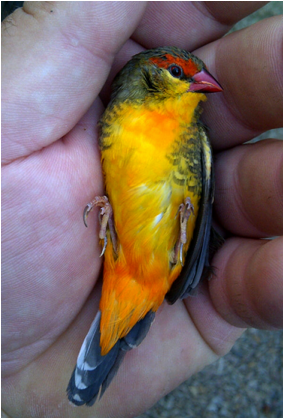
And if you take the effort to select from a shipment you may even end up with a bird with as much orange as this one - but its still local! So that brings me to the conclusion that there is a lot of variation within clarkeii - naturally, that accounts for the 3 morphs. Compare the 3 pics and you will see the difference. So that beggs the question - what does the Amandav subflava subflava look like then?
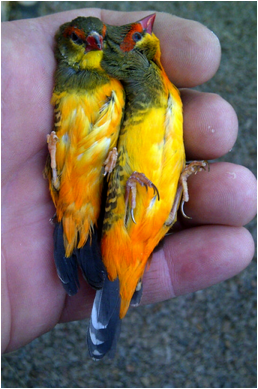
It certainly has a greater extension of orange, more noticable in the belly region, but take note that it is a much, much smaller bird than the local one (and you thought a Rooiassie was tiny!) Will send another pic or two that shows the difference in the size.
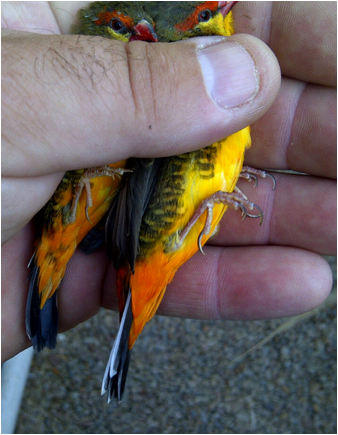
And then lastly, talking about spending money on the wrong thing - I have seen lots of breeders paying top dollar for "Black Orange-breasts" that look like this. This is NOT a mutation, just a condition called melanism which happens to be quite common in the Amandava family. When exposed to sun light and a good diet the birds moult out to its normal plumage so beware!