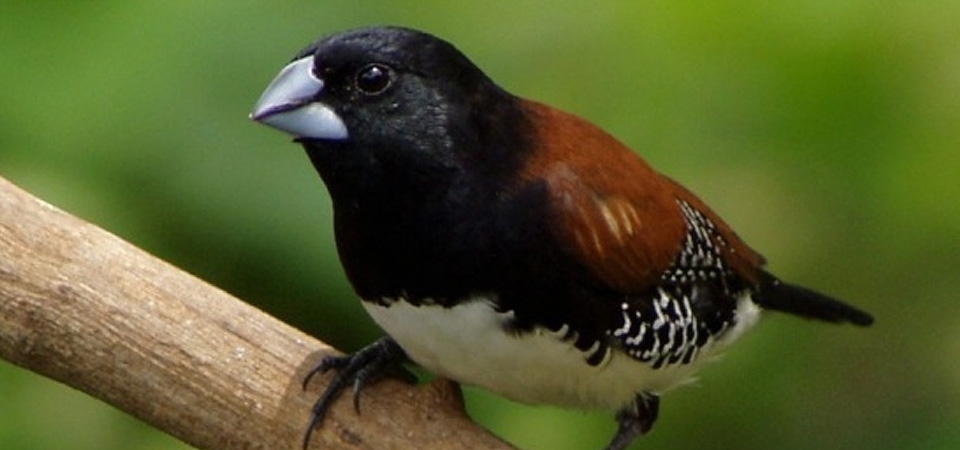
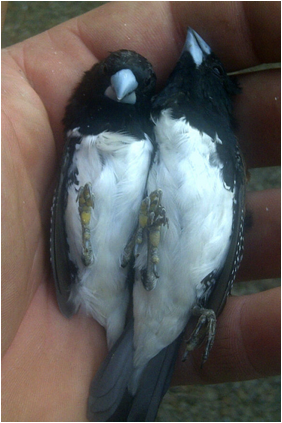
Not a lot of differences in the nominate form lonchura bicolor bicolor so best to have them surgically or DNA sexed.
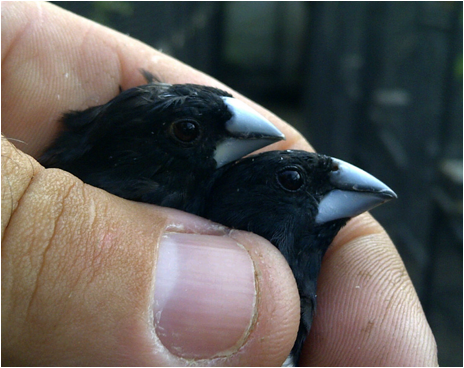
In side profile, the cocks bill is shorter and stubbier
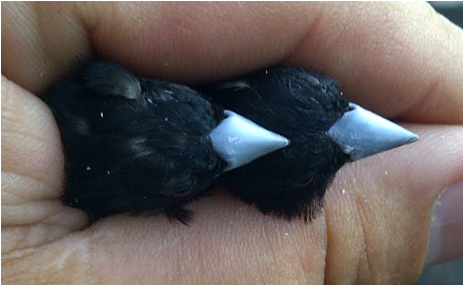
This is also evident when viewed from above.
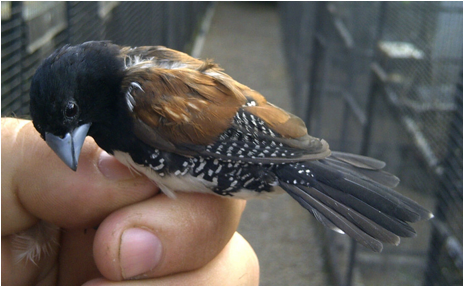
The Black-and-white also has two sub-species, this one is the lonchura bicolor nigriceps, commonly called the Rufous-backed Mannikin. In its southern part of its range it looks like this, and in the north-western part it becomes the Black-and-white where the brown on the back is replaced by black, with the dots reduced to 3-4 spots on the primaries. In the middle of the range it resembles a mix of the two whereby its black but retains all the spotting on the wings and rump. That one is called the lonchura bicolor poensis (used to be called the Fernando-po Mannikin)
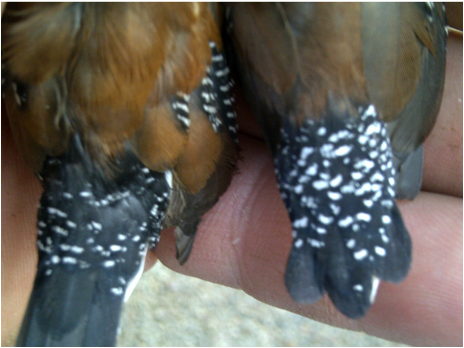
These are very easy to sex visually. In addition to the differences mentioned so far, the cocks spotting on the rump is more pronounced and structured, giving the effect of wanting to form bars, whereas the hens spotting is more random and patternless (cock on right)
