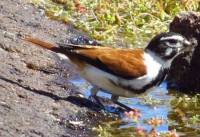
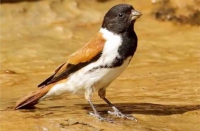
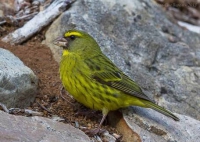
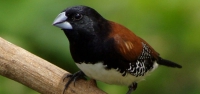
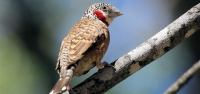
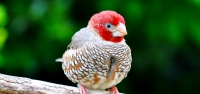
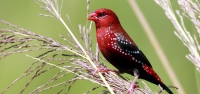
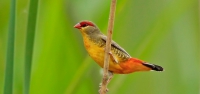
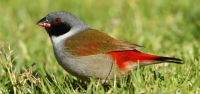
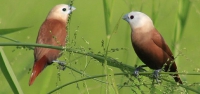
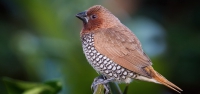
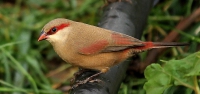
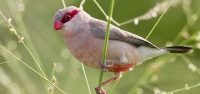
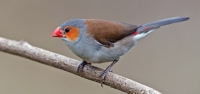
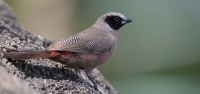
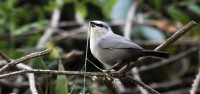
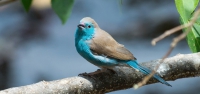
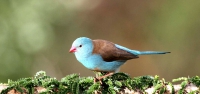
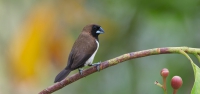
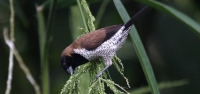
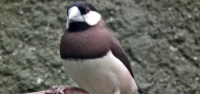
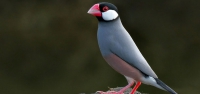
 For several years Neil Chilton-Jones has been breeding African waxbills with considerable success in outdoor aviaries in the well wooded grounds of his large property at Klip River about 40km south of Johannesburg.
Among the reasons for the good results he attains with this group of birds is his close proximity to an abundance of termite mounds, and he has overcome the various problems associated with the feeding of termites to his waxbills on a daily basis. The termites are fed in wooden feeders commonly sold for attracting wild birds into gardens. The steeply sloping over these trays protect the termites from sun and rain. These bird feeders can be suspended in the aviaries and the termites are put into plastic drinking bowls generally used for dogs. Black ants, so often a scourge in this country where termites are fed continuously, can be kept at bay by filling the rim around the base of these bowls with water.
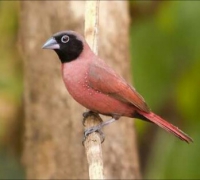
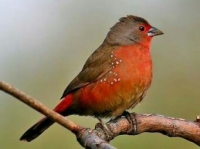
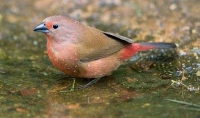
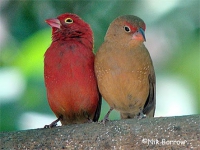
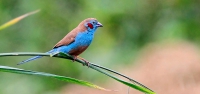
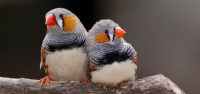
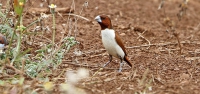
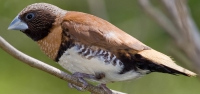
Another reason for the consistently good results is the housing of the waxbills mainly as single pairs to a small aviary only 0.6 metres wide X 2.4 metres 1 X 1.8 metres high, so that there cannot be any disturbance whatsoever when pair is nesting. All the aviaries are planted with natural grasses and the various types of millet. Furnishing the aviaries with thorn tree (acacia) branches is thought to provide a stimulus to breed with this group of birds With these aviary conditions breeding results with Orange-breasted, Cordon Bleu and Blue-capped Waxbills as well as Firefinches have been impressive.
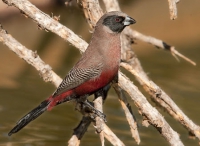
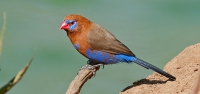
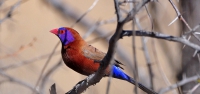
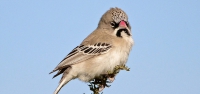
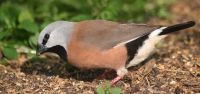
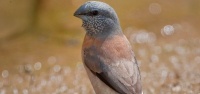
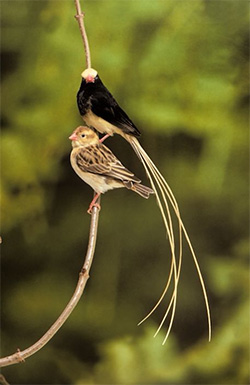
The challenge to succeed with the Straw-tailed Whydah was attempted in a larger aviary 3.6 metres square with the height increased to 3.3 meters to provide open space for the male whydah to perform his spectacular mating display resembling some exotic firework above all the vegetation provided for nesting sites. For 2014 this aviary was allocated to single pairs of Straw-tailed Whydahs, Purple Grenadiers, Peter's Twinspots and Blue-capped and Black-cheeked waxbills. An old male Schlegel's Twinspot was also left in this aviary, but it was by no means overcrowded.
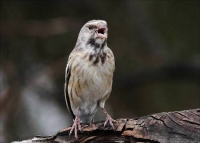
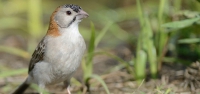
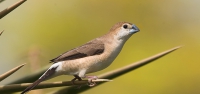
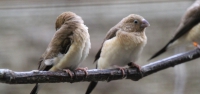
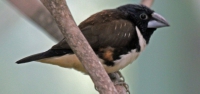
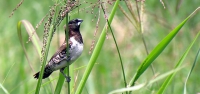
The Purple Grenadiers built a globular grass nest in dry acacia branch 1.2 metres above the ground, but lost their first round of babies when they were quite well grown but prior to their leaving the nest. In July 2014 it became apparent that they were feeding babies again in their same nest, the assumption being that they were baby Purple Grenadiers. It was only after two babies had left the nest it was noticed that they did not have blue rumps and were too dark in brown tone and too heavily streaked on the back to be the offspring of the parents feeding them. At the time of my visit at the beginning of September it was obvious there were two young Straw-tailed Wydahs flying about vigorously in the aviary. They tended to perch on high and exposed branches and were steady subjects to photograph. Their sex could not yet be determined.
This breeding is a first for South African aviculture and has won widespread respect. Another focus of interest in this aviary was the nest built by the Black-cheeked Waxbills right at the top of a thorn tree branch. Black-cheeked Waxbills are recorded as nesting high up in thorn trees in the wild, so best wishes are extended to Neil Chilton-Jones for achieving another challenging breeding in due course.